
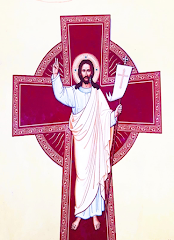
Easter, the celebration of the resurrection of Jesus Christ, is more than a religious event. It is a profound symbol of liberation, of the triumph of life over death, and of justice over oppression. In the Indian context—scarred by the persistent realities of communal hatred, caste discrimination, and religious intolerance—Easter becomes an urgent metaphor and an inspiration for a new beginning. It invites all people, not just Christians, to participate in a transformative journey toward a more just, inclusive, and compassionate society.
The resurrection of Jesus is not just a spiritual doctrine—it is a cosmic event. It is the divine affirmation of human dignity and the rejection of death-dealing forces such as violence, bigotry, and systemic injustice. In rising from the dead, Jesus does not merely return to life—he inaugurates a new creation, a new order where the last are made first, and the crucified are vindicated. This event offers a blueprint for how societies, including India, can overcome entrenched systems of discrimination and exclusion.
In the Indian social landscape, caste remains one of the most deeply rooted and destructive hierarchies. Even within communities that preach equality and fraternity, including the Christian community, caste continues to determine status, power, and access. Dalit Christians—those who converted from Scheduled Caste backgrounds—continue to face social ostracism, economic deprivation, and institutional neglect. Despite embracing a religion that proclaims liberation and equality, they often find themselves trapped in the same structures of caste-based marginalization they sought to escape.
The resurrection, then, must be read as a radical act of social transformation. It is God's response to the crucifixion—the violent, unjust killing of the innocent and the marginalized. Jesus, crucified under the Roman Empire, represents all who are oppressed and silenced by power. His resurrection is not a symbolic or psychological event; it is a real, bodily, and historical act by God—a cosmic no to oppression and a divine yes to justice and liberation. This has powerful implications in India today, where the oppression of Dalits, Muslims, Adivasis, and other marginalized communities is not just social but systemic.
In this light, Easter calls for a confrontation of the uncomfortable contradictions between principle and practice. India’s Constitution promises equality, secularism, and justice for all. Yet, in practice, religious minorities and oppressed castes often find themselves outside the sphere of this constitutional protection. Discrimination based on caste continues, even among Christians and Muslims, despite the inclusive teachings of these faiths. The Ranganath Misra Commission and the Sachar Committee have both acknowledged this contradiction. They called on the state to remove religious barriers that prevent Dalit Christians and Dalit Muslims from availing Scheduled Caste status and the benefits that come with it. Ignoring these recommendations is not just a political failure—it is a moral and constitutional abdication.
The resurrection reminds us that real transformation is possible—but only when we face the truth of our condition. The path forward requires radical honesty and courageous reform. The Church must recognize its complicity in perpetuating caste hierarchies and take concrete steps to dismantle them. It must practice what it preaches: that all are equal in the eyes of God. It must give leadership roles and equal respect to Dalit Christians and stand with them in their struggle for justice—not as an act of charity but as a commitment to truth and faith.
At the same time, the state must fulfill its constitutional responsibilities without bias. The denial of Scheduled Caste status to Dalit Christians and Dalit Muslims is based on a flawed assumption—that caste does not exist outside Hinduism. This is not only factually incorrect, but it also contradicts the very spirit of the Constitution, which enshrines justice and equality irrespective of religion. Caste is a social reality that transcends religious boundaries, and failing to address it due to religious considerations perpetuates injustice under the guise of neutrality.
The resurrection also challenges the privileged to relinquish their power. For upper-caste Christians, this means acknowledging the benefits they continue to enjoy within the Church and in society—and actively working to dismantle them. Solidarity is not a sentimental idea; it is a moral imperative. It means listening to Dalit voices, promoting them to leadership, and standing beside them in their demands for justice and dignity. For Dalit Christians, Easter offers hope. Despite the continued struggle, their story is aligned with the story of the risen Christ. They are not forgotten. Their suffering has meaning, and their struggle will not be in vain.
To live the Cross is to live in solidarity with the
crucified of our time: the lynched, the raped, the displaced, the
discriminated, and the poor. The Cross is not the end—it is the beginning of
the path that leads to Easter, to a renewed life committed to justice and
equality. Living Easter, then, is not just a matter of belief—it is a matter of
practice, of embodying the values of the resurrection in our politics, our
communities, and our daily lives.
We must move from discrimination to dignity, from exclusion to embrace, from division to unity. This is not idealism—it is the necessary path forward if we are to fulfill the promise of the Indian Constitution and the deeper spiritual promise of Easter. This transformation cannot be left to the Church alone, nor can it be solely the responsibility of the state. It requires the participation of all: civil society, religious institutions, political leaders, and every individual who seeks a more humane and just India.
In this context, resurrection becomes the ultimate meta-narrative—a story that redefines all other stories. It demands that we set aside our narrow sectarianism, our communal biases, and our caste prejudices. It calls us to a new way of being human—one that prioritizes love, justice, and communion over fear, hatred, and division. Resurrection is not an escape from the world—it is a call to engage with the world more deeply, more honestly, and more courageously.
India today stands at a crossroads. The digital age has brought with it not only information but also noise—fake news, hate propaganda, and divisive rhetoric flood our screens. Communal violence continues to rear its head, and caste discrimination remains an everyday reality. In such a context, to live mindfully, consciously, and compassionately is a revolutionary act. It is to reject the lies that divide us and embrace the truth that unites us.
This Easter, let us plant our feet firmly on the ground—rejecting all forms of caste, creed, and communal divisions. Let us rise with Christ to a new life—not just personally but collectively. Let us confront the systems that crucify the innocent and stand up for those who are denied their dignity. Let us live the resurrection—not just as a hope for the afterlife but as a commitment to justice here and now.
That is the true meaning of Easter in India today: a rising not only from the dead but from the death-dealing forces of caste, communalism, and systemic discrimination. Let us rise together.


