Showing posts with label humanity. Show all posts

Monday, December 29, 2025

REALIZING TAGORE'S CHRISTIAN VISION: CHRISTMASTIDE IN RABINDRANATH'S THOUGHT FOR A UNITED INDIA


Introduction: Commemoration of   Jesus’ Nativity

Rabindranath Tagore's contemplation of Christ and Christmas transcends denominational boundaries, offering a universal spiritual blueprint rooted in divine incarnation, selfless love, and human service. In the 19th-century Bengal renaissance, amid Brahmo influences from Raja Rammohan Roy and Keshab Chandra Sen, Tagore envisioned Jesus not merely as a moral teacher but as God's historic descent into humanity for liberation. This essay explores Tagore's Christ-vision—drawn from his essays, poems like Shishutirtha, and Shantiniketan practices—and outlines practical pathways to realize it in today's polarized India, fostering interfaith harmony, social justice, and ethical renewal.

19th-Century Bengal: Seeds of Tagore's Christ-Vision

Bengal's 19th century marked a cultural crossroads where Jesus' ethical teachings permeated educated society through Brahmo Samaj reforms. Tagore inherited this legacy but reframed Christ as history's pivotal moment: God incarnate for human redemption. Unlike colonial merrymaking—cakes, wine, revelry—Tagore sought a pure, early Church-like Christmas.

Shantiniketan's formal "Christotsav" began in the 1910s, peaking in 1931 under Tagore as Ashram Guru. On December 25, the prayer hall featured only a lamp and Gospel readings—no pomp, echoing Puritan simplicity yet brimming with spiritual depth. Tagore saw Bethlehem's child as God's earthly radiance, blending history and mysticism.

Realizing in Modern India: Revive such austere observances in urban interfaith centers. Communities could host lamp-lit Gospel readings alongside Upanishadic chants, countering commercialization. Schools in Kolkata or Santiniketan might adopt annual "Tagore Christotsav" to teach youth divine humility, reducing festive consumerism amid India's rising materialism.

Theology of the 'Son of Man': Divine Kenosis

Tagore deeply engaged Jesus' self-designation as "Son of Man," interpreting it as the Heavenly Father's compassionate descent from throne to dust. In his 1931 "Borodin" essay, he wrote: "The Great One came in the garb of the lowly, so the lowly need not fear but love Him." This mirrors Philippians 2's kenosis—God emptying Himself as servant. Tagore affirmed Christ's incarnation as God's loving assumption of humanity to redeem the fallen, echoing John 15:13: "Greater love has no one than this: to lay down one's life for one's friends."

Realizing in Modern India: Promote kenosis through "service sabbaths" on Christmas Eve. Corporates in Mumbai or Delhi could mandate employee volunteerism—feeding the homeless, mirroring Christ's humility. Policymakers might integrate this into Swachh Bharat, framing cleanliness as divine service, healing caste divides by uniting privileged and marginalized in shared labor.


 Aspect of Kenosis       Tagore's Insight                      Practical Application for India 2025

Divine Descent          God as humble child in stable     Leaders visit slums, share meals with laborers on Dec 25

Self-Emptying            Rejecting glory for love             Politicians forgo VIP events for community prayer halls

Redemptive Love       Incarnation for sinners               Interfaith dialogues emphasizing forgiveness post-riots


Shishutirtha and Passion Play: Historic Awakening

In 1930 Munich, Tagore witnessed Oberammergau's Passion Play—village reenactment since 1634 of Christ's trial, crucifixion, resurrection. Moved, he penned The Child (later Shishutirtha in Bengali). Humanity gropes in sin's darkness, finding light in a thatched hut: Mary cradling the newborn redeemer amid a violent world.This poem symbolizes Christ as humanity's savior, bringing peace to strife.

Realizing in Modern India: Stage community Passion Plays in villages like Oberammergau-style, blending Shishutirtha recitals with local folk theater. In conflict zones like Manipur, youth groups could perform annually, channeling violence into cathartic art. Digital platforms like YouTube could stream Tagore-infused versions, reaching 1.4 billion Indians to inspire non-violent protest against injustice.


The Cross: Glory of Sacrifice

Tagore viewed the Cross not as mere tragedy but divine love's apex. Christ's death proves truth's immortality, a "holy sorrow" purifying souls. The crown of thorns surpasses royal diadems, earned in love's pain. Christmas joy stems from sacrifice, not indulgence.

Realizing in Modern India: Launch "Cross of Service" campaigns. NGOs could build "Sacrifice Centers"—free clinics or orphanages named after Tagore's vision—staffed by volunteers on holidays. Amid farmer protests, emulate Titanic's 1912 heroism (Tagore's example of latent Christ-spirit), where elites sacrificed for others, by funding rural relief with urban donations.

Oriental Jesus: Universal Oneness

Historically Asian, Jesus was Westernized by colonialism. Tagore reclaimed Him as "ours," linking Passion to Journey of the Magi (translated as Tirthayatri). Magi traverse deserts humbly, shedding pride for divine sight—echoing humility across faiths.He fused Christ's "I and the Father are one" with Upanishads' "So'ham."

Realizing in Modern India: Host "Oriental Christ Festivals" blending Christmas with Diwali lamps or Eid charity. Temples, mosques, churches in cities like Varanasi could co-celebrate, reciting Tagore's Manusher Dharma: "Where love's victory song resounds, Christ is present." This counters communalism, promoting Article 25 constitutional harmony.

Institutional Christianity vs. True Christ

Tagore critiqued "Christianity" eclipsing Christ—Church dogma over love, missionaries wrapping Him in foreignness. "Save Christ from sectarian Christians," he urged. Europe's service ethic stems from Christ's "life-tree," fructifying even in unaware hearts, as in Titanic sacrifices. Missionaries' total renunciation—leaving wealth for perilous fields—reveals Christ's living form, not evangelism's pride.

Realizing in Modern India: Reform missions via "Tagore Accords"—interfaith pacts prioritizing service over conversion. In Northeast India, train youth as "service missionaries" for tribal health/education, embodying Tagore's critique. Corporates could fund "Life-Tree Projects," greening wastelands while teaching ethical capitalism rooted in human dignity.


Pitfall of Institutionalism             Tagore's Remedy                     Indian Adaptation


Dogma over Love                           Heart's devotion              Replace sermons with joint service projects

Sectarian Ownership                      Universal light                 Multi-faith Christmas carols in schools

Imperial Superiority                       Humble service               Missionaries learn local languages/cultures first


Sorrow's Symbol: Indian Spiritual Bridge

Tagore saw Christ's cross as Upanishadic tapasya—embodiment of "So'ham." Shishutirtha's finale: "We whom we slew shall show us the way. Victory to man, the newcomer superhuman!"

Realizing in Modern India: Integrate into yoga retreats: "Cross-Yoga" sessions meditating on sacrifice for mental health crises. Bollywood could produce Tagore-scripted films on Christ's Asia roots, fostering pride and reducing conversions-as-threat narratives.

East-West Synthesis: Rejecting Imperialism

Tagore honored missionaries' sacrifice but scorned empire. Christ gains new life in India freed from sectarianism.

Realizing in Modern India: Policy level, amend education curricula with Tagore's Kalantar—teaching Christ's universalism in NCERT texts. Annual "Tagore Peace Awards" for interfaith service, awarded by President on Christmas.

Pathways to Tagore's Vision Today

Tagore's essence: Divine incarnation, purity-simplicity, service-love. Here are certain lines of action and ways to realize Tagore's Christian vision for today's India:

1. Community Practices: Neighborhood "Christotsav Grihas" with lamp, Gospel, Tagore poems—no extravagance.

2. Education: Santiniketan-model schools mandating interfaith ethics classes.

3. Social Action: "Son of Man Funds" for urban poor, volunteer-driven.

4. Cultural Fusion: Passion Plays with Bharatanatyam, Rabindra Sangeet carols.

5. Digital Outreach: Apps streaming Shishutirtha with AR Bethlehem experiences.

6. Policy Advocacy: Lobby for "Service Leave" on Dec 25, tax breaks for charities.

7. Observe nationally Jishu Divas on 25 December, as a national holiday.

7. Personal Discipline: Daily "kenosis journals"—log selfless acts inspired by Christ.

These steps transform Christmas from ritual to revolution, realizing Tagore's Christ as liberator for India's 1.4 billion.

Conclusion: Eternal Light for Bharat

Drawing from Tagore's Manusher Dharma, Pather Sanchay, Shantiniketan, and essays like Borodin, this synthesis provided Bengali reflections into actionable proposals. In short, Tagore's vision rescues Christ from dogmas, restoring Him as humanity's poet-saint. In 2025, amid polarization, it beckons India to unity. As Tagore might sing: "Come anew in this land of light." Let Christ's birth ignite service, bridging divides for a truly Swarnim Bharat.

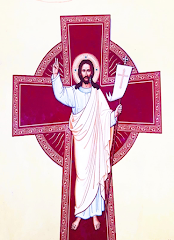
  

Sunday, April 20, 2025

Easter: A Call to Resurrection, Liberation, and Justice in India's Context of Communal Hatred and Discrimination


Easter, the celebration of the resurrection of Jesus Christ, is more than a religious event. It is a profound symbol of liberation, of the triumph of life over death, and of justice over oppression. In the Indian context—scarred by the persistent realities of communal hatred, caste discrimination, and religious intolerance—Easter becomes an urgent metaphor and an inspiration for a new beginning. It invites all people, not just Christians, to participate in a transformative journey toward a more just, inclusive, and compassionate society.

The resurrection of Jesus is not just a spiritual doctrine—it is a cosmic event. It is the divine affirmation of human dignity and the rejection of death-dealing forces such as violence, bigotry, and systemic injustice. In rising from the dead, Jesus does not merely return to life—he inaugurates a new creation, a new order where the last are made first, and the crucified are vindicated. This event offers a blueprint for how societies, including India, can overcome entrenched systems of discrimination and exclusion.

In the Indian social landscape, caste remains one of the most deeply rooted and destructive hierarchies. Even within communities that preach equality and fraternity, including the Christian community, caste continues to determine status, power, and access. Dalit Christians—those who converted from Scheduled Caste backgrounds—continue to face social ostracism, economic deprivation, and institutional neglect. Despite embracing a religion that proclaims liberation and equality, they often find themselves trapped in the same structures of caste-based marginalization they sought to escape.

The resurrection, then, must be read as a radical act of social transformation. It is God's response to the crucifixion—the violent, unjust killing of the innocent and the marginalized. Jesus, crucified under the Roman Empire, represents all who are oppressed and silenced by power. His resurrection is not a symbolic or psychological event; it is a real, bodily, and historical act by God—a cosmic no to oppression and a divine yes to justice and liberation. This has powerful implications in India today, where the oppression of Dalits, Muslims, Adivasis, and other marginalized communities is not just social but systemic.

In this light, Easter calls for a confrontation of the uncomfortable contradictions between principle and practice. India’s Constitution promises equality, secularism, and justice for all. Yet, in practice, religious minorities and oppressed castes often find themselves outside the sphere of this constitutional protection. Discrimination based on caste continues, even among Christians and Muslims, despite the inclusive teachings of these faiths. The Ranganath Misra Commission and the Sachar Committee have both acknowledged this contradiction. They called on the state to remove religious barriers that prevent Dalit Christians and Dalit Muslims from availing Scheduled Caste status and the benefits that come with it. Ignoring these recommendations is not just a political failure—it is a moral and constitutional abdication.

The resurrection reminds us that real transformation is possible—but only when we face the truth of our condition. The path forward requires radical honesty and courageous reform. The Church must recognize its complicity in perpetuating caste hierarchies and take concrete steps to dismantle them. It must practice what it preaches: that all are equal in the eyes of God. It must give leadership roles and equal respect to Dalit Christians and stand with them in their struggle for justice—not as an act of charity but as a commitment to truth and faith.

At the same time, the state must fulfill its constitutional responsibilities without bias. The denial of Scheduled Caste status to Dalit Christians and Dalit Muslims is based on a flawed assumption—that caste does not exist outside Hinduism. This is not only factually incorrect, but it also contradicts the very spirit of the Constitution, which enshrines justice and equality irrespective of religion. Caste is a social reality that transcends religious boundaries, and failing to address it due to religious considerations perpetuates injustice under the guise of neutrality.

The resurrection also challenges the privileged to relinquish their power. For upper-caste Christians, this means acknowledging the benefits they continue to enjoy within the Church and in society—and actively working to dismantle them. Solidarity is not a sentimental idea; it is a moral imperative. It means listening to Dalit voices, promoting them to leadership, and standing beside them in their demands for justice and dignity. For Dalit Christians, Easter offers hope. Despite the continued struggle, their story is aligned with the story of the risen Christ. They are not forgotten. Their suffering has meaning, and their struggle will not be in vain.

To live the Cross is to live in solidarity with the crucified of our time: the lynched, the raped, the displaced, the discriminated, and the poor. The Cross is not the end—it is the beginning of the path that leads to Easter, to a renewed life committed to justice and equality. Living Easter, then, is not just a matter of belief—it is a matter of practice, of embodying the values of the resurrection in our politics, our communities, and our daily lives.

We must move from discrimination to dignity, from exclusion to embrace, from division to unity. This is not idealism—it is the necessary path forward if we are to fulfill the promise of the Indian Constitution and the deeper spiritual promise of Easter. This transformation cannot be left to the Church alone, nor can it be solely the responsibility of the state. It requires the participation of all: civil society, religious institutions, political leaders, and every individual who seeks a more humane and just India.

In this context, resurrection becomes the ultimate meta-narrative—a story that redefines all other stories. It demands that we set aside our narrow sectarianism, our communal biases, and our caste prejudices. It calls us to a new way of being human—one that prioritizes love, justice, and communion over fear, hatred, and division. Resurrection is not an escape from the world—it is a call to engage with the world more deeply, more honestly, and more courageously.

India today stands at a crossroads. The digital age has brought with it not only information but also noise—fake news, hate propaganda, and divisive rhetoric flood our screens. Communal violence continues to rear its head, and caste discrimination remains an everyday reality. In such a context, to live mindfully, consciously, and compassionately is a revolutionary act. It is to reject the lies that divide us and embrace the truth that unites us.

This Easter, let us plant our feet firmly on the ground—rejecting all forms of caste, creed, and communal divisions. Let us rise with Christ to a new life—not just personally but collectively. Let us confront the systems that crucify the innocent and stand up for those who are denied their dignity. Let us live the resurrection—not just as a hope for the afterlife but as a commitment to justice here and now.

That is the true meaning of Easter in India today: a rising not only from the dead but from the death-dealing forces of caste, communalism, and systemic discrimination. Let us rise together.


Monday, April 8, 2024

GIVE PEACE A CHANCE


"Peace is a divine gift but at the same time the fruit of human efforts," the Vatican message for Ramadan 2024  states. It continues, “The desire for peace and security is profoundly rooted in the soul of every person of good will, since no one can fail to see the tragic effects of war in the loss of human lives, the toll of serious injury and the throngs of orphans and widows."  Because of this, Ramadan calls for respect for the gift of life, the  conviction that hatred, violence and war – which is “fratricide, useless, senseless, and dark” – must be rejected and peace preserved. For preserving this peace, we need "closeness and friendship"  in order to "extinguish the fire of war and light the candle of peace."

The ongoing production and trade of arms as the primary driving force, accompanied with the enduring human aspiration for control, geo-political ambitions, and economic interests are the roots of conflicts. The global  human family suffers much from the devastating effects of the use of arms – as “dipping a morsel of bread in the blood of our brother”, says Pope Francis.  Inter-State conflicts, armed clashes, military combat,  criminal organizations, armed gangs, killing of innocent civilians, millions of people displaced, arms trade, immoral commerce, have been on the increase. This increase in hostilities is transforming “a third world war fought piecemeal” into “a genuine global conflict.”

Like the Christian Lent, Ramadan focuses more arduously on prayer, fasting, almsgiving. In fact, all religions consider human life sacred. Therefore,  it must be respected and protected. Consciences are to be formed "to respect the absolute value of the life of each person and the right to physical integrity, security and a dignified life."

Giving peace a chance requires courage and conviction, especially in a digital landscape where outrage and polarization often reign supreme. Yet, if we are to truly honor the legacy of Jesus, we must rise above the fray, resist the temptation to engage in hostility and vitriol, and instead strive to cultivate a culture of empathy, understanding, and respect.

Ultimately, living the Lent and Ramadan, or celebrating Easter, Resurrection or Id AI-FITR in the present times, is not just about restoring religious faith and practice and defend its ‘sacredness’ and its ‘greatness’, but about giving peace a chance. It is about reclaiming the transformative power of universal message of love and peace – a message that transcends time, culture, and ideology and speaks to the deepest longings of the human heart; reclaiming his message of compassion and kindness, and applying it to the challenges of the modern world. By embracing the values that each religious belief embodies and promoting a culture of dialogue and understanding, we can work towards a more peaceful and just society.

We recall the words of Jesus himself: "Blessed are the peacemakers, for they will be called children of God" (Matthew 5:9). The word, Islam, coming from an Arabic root,  etymologically means peace, salaam, or shalom in Hebrew. In a world torn apart by conflict and division, may we be instruments of peace, channels of love, and beacons of hope, both online and offline. The followers or believers of the world Religions must form a peace-attitude of the mind and heart that outlines a life program for them. It implies a total sharing of peace and unity as the way of life and a mission. All must imbibe the ability to observe it and put it into practice.

The very first greeting of the Resurrected Jesus is: “Peace be with you.” This must be the be-all and end-all of all faith practices. Faith is not just a subjective experience for one’s own salvation; rather, it is a way to peace, love and unity. Otherwise, all Religions are a fraud and fake. Universal peace is  the fullness of God Kingdom on earth. True, that peace in this imminent world is not all. There is still a greater possibility for God to be up to a permanent peace. And the path of permanent peace is ever open to everyone. Jesus went all the way to death seeking this eternal peace – peace for all. The stunning lessons from Him and from the world-evil should stimulate us all to work for lasting peace.  

Human beings are often trapped in their own remorse, unable to see hope at the end of the tunnel; they feel helpless, discredited.  Peace is not the absence or removal  of outside problems though; instead, peace infuses trust and hope for a better future; disheartened people are put at peace with themselves. Therefore, we move from remorse to a peace-mission, by breaking out of ourselves, from the self-absorption, from our self-centered imprisonment. Peace is an irreplaceable fruit of justice and human Rights; it is the absence of evil in us, for evil has its price. We, therefore, cannot run far away from our duty of finding peace through justice and Rights, thus emerge from the depths of abandonment – a sense of being unwanted. Peace is about being freed by setting our feet on the ground and keep walking in the midst of uncertainty. Consequently, peace rehabilitates us and lifts us up from the human dungeon of hopelessness, dispelling the darkness and fear that are residing within us. Peace touches our inner core to raise us up to confidence so that through a shared mission we can live a fuller life on earth. A renewal of peace happens, therefore, when we stoop humbly to serve and bind the wounded, and those broken hearted.

Pope Francis tells the Christians and Muslims, and all people of goodwill, to extinguish “the fires of hatred, violence and war, and instead light the gentle candle of peace.” God loves all those who devote their lives to the service of peace. Peace is an outcome of justice; it is the fruit of human efforts to build a just world. Human being is called to lay the conditions necessary for its preservation by “drawing upon resources of peace that are present in our rich human and religious traditions” and by acting as “witnesses of hope”. Again, at Easter “Urbi et Orbi” on Wednesday, 3rd April 2024, the Pope called for peace in the world amid global conflict, war, human suffering, destruction, homeless refugees, social tensions,  humanitarian crises, human rights violations, and human trafficking,  proclaiming Jesus Christ as “the way of peace, reconciliation and fraternity.”  War is "always an absurdity” and “a defeat."

In the midst of these conflicts, people of goodwill of all Religions and non-believers are to enter into dialogue for building up of peace through “encounter, coexistence and pluralism”  especially in Gaza, Syria, Lebanon, Ukraine, Russia, Western Balkans, Armenia and Azerbaijan, Rohingya in Myanmar and Africa. Let us all break the ‘Good-Friday-Ramadan fast’  along with other religious groups, including the Bahá', Hindus, Buddhists, Sikhs, and Taoists, in fellowship, friendship, solidarity and peace. Let our greetings to each other be: Shalom, Shanti, Peace, Salam, and serve our neighbors in need, thus contribute to the common good of the society.


Saturday, March 30, 2024

THROUGH JESUS, GOD DRAWS ALL THINGS BACK TO HIMSELF


The Chief priests and the Pharisees unite in a plot to kill Jesus, not because he broke the Sabbath law by healing the sick, but for blasphemy in claiming himself to be the Son of God and for raising Lazarus from the dead. They found a worth issue to accuse him of, using the tactic of scapegoating:  a hierarchical group of a society, in a conflict situation, decides to blame an individual allegedly responsible for the social, political and religious instability.

That these religious figures like Caiaphas preserve their socio-religious positions and influences, the group decides that “one man should die instead of the people, so that the whole nation may not perish.” This scapegoating strategy is followed even today by political and religious leaders.  But God stands for the Truth. He stands for the ‘scapegoated’ victims. God does not want divisions and violence, instead, He wants a society based on love, justice, peace, forgiveness, compassion and unity. Through Jesus, God wants to draw all People of all nations on earth, to Himself — as one body in the One Lord of all.

The Pharisees and the socio-political leaders were socially, psychologically and ideologically insecure. They felt unsafe, apprehending a people’s uprising against them and the Roman Occupants. There was a sense of future uncertainty about their continuity, control and dominance over the Jewish society. We know well that all conscience acknowledges the truth, the good and what is just. They knew what they ought to have done. Their socio-religious instability and insecurity pressed on them to put Jesus to death and be done with.  From the heaven, His home, Jesus who descended to the earth for the sake of humankind, was killed by his own kith and kin. He who  became a man for us all, –  lived, taught, served and healed – was betrayed, denied, scourged, crowned with thorns, mocked, spitted upon, whips blowed, weighed down by the heavy Cross, hands bound, stretched and nailed to a wood, crucified, side pierced with a sword, died and was buried.

A somber Good Friday recalls the crucifixion and death of Jesus on Calvary, inviting Christians to accompany Jesus in his suffering on the cross.  No Mass is celebrated on this day. Tabernacles are empty of the Eucharist all over the world. The faithful and all people of good will (People of God), are drawn to the cross, following in the footsteps of Jesus on to Calvary. But, why? Precisely because it perfects human nature through his Passion. As a fully human person, Jesus identified himself with sinful humanity and did not want to die. No human being wants to die just for the sake of it.  Rather, Jesus accepted it, as his Father’s will– to take upon himself the sins of the world. He chose obedience to death out of a filial love –  an obedience learnt through human nature.


Christ’s Passion on the cross, led him in the midst of human frailties that destroyed him; but made it clear that “by his stripes we were indeed healed.” Entering into “godforsakenness” his  sacrificial death brought “the divine light to the darkest place”, writes Bishop Barron. His willing obedience in sacrificing his self, Jesus “reestablished the right relationship between divinity and humanity.” All this happened for establishing the Kingdom of God, inhabited by a united people of good will. The Son Jesus who called God his Father accomplished so, in full agreement with the Father. As the image of the Father, he executes his Father’s project: bestowing new life to all. Humanity had pinned their hopes on Him.  In facts, he fulfils that hope, raising humanity up, by falling down and dying. The dormant life-principle inside the ‘seed’ grows by being mixed with the earth, water, heat, air and light, that together crack open the seed, to bring much fruit.  This dying self leads to regeneration – a new life. “The hour has come for the Son of Man to be glorified” because this grain of wheat dies to produce much fruit, by bringing all people where God is. And Jesus said, “it was for this purpose that I came to this hour”. The enemies “of this world will be driven out. And when I am lifted up from the earth, I will draw everyone to myself.” (cf. Jn12:20-30). In the Gethsemane Garden Jesus prayed for the strength to fulfil this project of the Father. On the Cross with courage he conquered death, to give new life to humanity and to all beings on earth – bringing all things to completion.


God’s work was undoubtedly all finished at the beginning of the world. It was in perfect unison, but humanity failed Him  through disobedience. God fixed ‘another day’ for people to listen to him (obey) and reach Him.  The covenant of creation, once broken through idolatry and earthly preoccupations, was renewed and sealed within human hearts with a desire to seek intimacy with God, and be with Him forever. The New Covenant, therefore, was established through Jesus’ death on the Cross, extending to all peoples. Jesus draws everyone to Himself by service of love, indicating how all peoples in all times will be able to see him and encounter him. His death on the Cross will bring forth fruitfulness for all peoples. Through his Resurrection, the dead grain of wheat will become the bread of life for the entire world (cf. Benedict XVI, Wednesday Audience, June 14, 2006). God will lift him up and draw all peoples to himself through his Son and in the Spirit, and all nations will experience Jesus through this sacrificial love. From the Cross Jesus draws all to experience God’s love.

Jesus is more than a spiritual teacher. Bishop Barron says: “Something else is at stake in him and our relation to him.” As the Son of God, Jesus is divine. Jesus declares: “The Father is in me and I am in the Father.” So are we. According to Charles Williams, the basic foundation of Christianity is “coinherence,” – mutual indwelling of all plants, animals, planets, human beings, angels, and saints. According to Bishop Barron, the oneness of all sons, brothers, daughters, sisters, mothers, fathers, associates, Church members, is established through the Trinitarian relationship – God, the ultimate reality marked by the capacity for unity by a mutual act of love.  Therefore, we all are related and inter-linked. Jesus’ death and resurrection invites us to enter fully into their plural divine-coinherence, whose linking love is the Holy Spirit.

The inner blindness (Jn 9:39) often keeps human race from this union. The Jewish hierarchy presumed that “the Romans will come and take away both our land and our nation.” We know well that earthly nationhood and nationalism are on the rise today. But the desire for an “everlasting possession” (Genesis 17:6) has been there in human history – to be God’s and with God as His descendants. But the rulers and religious leaders have failed to keep this covenant. Kingdoms were divided, people forced into exile, Jerusalem fallen (Ez 33:21), temple pillaged, and kings deposed. Yet, God will gather the scattered children from among the nations and bring them back to the promised land. God will make them one nation. Jesus, the new David, through his ruling from the Cross, will bring peace on earth. God will dwell on earth. He will be our God and we will be his people. There will be one kingdom, one nation, one God, united by an everlasting love.


The new commandment of love, given by Jesus at the Last Supper, was executed on the Cross. The high priest Caiaphas fail to realize the truth; he thinks by eliminating Jesus, the problem of destabilizing the society caused by Jesus, will be solved, and consequently, it will preserve the status quo. But, we know, Jesus’ death will gather the dispersed children of God: “And I, when I am lifted up from the earth, will draw all men to myself” (Jn 12:32). Jesus’ death becomes the key to the Kingdom of God on earth.


According to Sarah Coleman, the Cross is a symbol of death and life, hate and love, violence and peace, accusation and forgiveness, sin and purity, brokenness and wholeness, as well as of gathering to all people to one community of brothers and sisters. Through it, affirms Bishop Barron, “everything is gained, destruction and restoration, death and victory. The cross, once the cruelest form of execution, is now a symbol of abundant life.”


Christ died for people out of a choice made in love. God manifested his love through human Jesus to reveal his divinity. Bishop Barron says that the cross was a brutal instrument, through which “the fallen powers of the world are subverted; sin, death and the devil are vanquished.” The crucifixion is “the portal to the resurrection” – to a new life, a new humanity, a new earth.


As St. Paul says, we are called to share “in his sufferings and become like him in his death.” We read, “Though he was of God, he did not regard equality with God as something to be grasped, but emptied himself, taking on the nature of a servant, made in human likeness, and in his appearance found as a man, he humbled himself by being obedient to death on the cross.” (Phil 2: 6-8). Through this humble act of will, God fulfilled the plan of uniting the whole humanity in Christ. As we gaze at Christ hanging on the cross, let all pain and anguish, struggles and achievements be seen with God’s lens, that goes way beyond the perspectives of this earthly life.

God is ever alive and active in creation, wherein  no created thing can escape from His grace. God in flesh has uncovered all secrets and has raised up all who have slept in sin. Jesus who died in the flesh, God has freed Him and all those in bondage, and has enlightened those in darkness. All beings, created in His image, are welcomed to live with Him, in Him and through Him, forming only one person, one Body. God has “refashioned our warped nature in His image”, to restore to us the life with Him, for the Kingdom of heaven has been prepared for us all from all eternity (cf. Office of reading, Ancient homily on Holy Saturday).


Thursday, March 28, 2024

THE ROASTED AND SHARED PASSOVER LAMB


Christ, the Passover Lamb, clothed in humanity that is capable of suffering, sacrificed himself for the  suffering people of God.  He triumphed over the diseases of soul and body. He dealt with a fatal blow the man’s destroyer, death. He was led like a lamb; slaughtered like a sheep. He ransomed humanity from servitude to the world; freed us from slavery; from darkness to light. He sealed human souls with his Spirit and blood.  He covered death with shame. He smote sin and robbed iniquity of offspring. He chose humanity to be his own forever.

Saint Melito of Sardis writes: “In Abel he was slain, in Isaac bound, in Jacob exiled, in Joseph sold, in Moses exposed to die. He was sacrificed in the Passover lamb, persecuted in David, dishonored in the prophets.” He was a man who was made to hang on the tree; was buried in the earth, and raised from the dead. The mute lamb, the slain lamb, the lamb of God was seized from the flock, dragged off to be slaughtered, sacrificed in the late afternoon, died in the early evening, and buried at night. But no bone of his was broken; his body knew no decay. He is alive and active now in the world.

Jesus’ disciples prepare a Passover supper with the eating of a lamb, sacrificed in remembrance of the lambs of the original Passover, whose blood had been smeared on the doorposts. In Exodus 12:1-8 we read: “If a family is too small for a whole lamb, it shall join the nearest household in procuring one and shall share in the lamb in proportion to the number of persons who partake of it; according to what each can eat you shall make your count for the lamb[…]That same night they shall eat its roasted flesh with unleavened bread and bitter herbs.”

Through this Passover meal, Jesus affirms John the Baptist’s prophecy that he would be the unblemished Lamb of God, to be sacrificed. This sacrifice, made present at every Eucharist for our sake only, because God does not need  it. “We participate in the act by which divinity and humanity are reconciled”, when we eat his body and drink the blood of the Lamb. 

But we, like Judas at the Last Supper, fail to see the sacrificial Lamb. We get busy in ‘doing what we plan to do’ – betray Jesus. Human history proves that God is often opposed by stubborn people, preferring sin to sanctity, evil to good. Being in intimacy with Jesus, is no guarantee of  one’s faithfulness in fellowship — the sanctity of the  Last Supper is destroyed by a friend’s betrayal, preferring darkness to light (truth), money to service, a hateful kiss to love. In fact, Judas asks in exchange,  “What are you willing to give me?”(Mt 26:15). It is the same Judas, in order to hide his betraying action, over-confidently self-affirms, “Surely it is not I, Rabbi?” Most of us act and behave that way.

The Prophetic Servant, the gentle Lamb  is called, commissioned and disciplined by God, into a well-trained tongue in order to  communicate  the word loud and clear, to all the nations (John 17:8). This gentle Lamb lies low, beaten and scourged, face struck and spat upon, yet obedient to God’s plan and not disgraced, because Jesus knows God will vindicate him.  We too are disciplined by God through our suffering, and  infidelity so that we may fully embrace his love. At the same Supper, Jesus washes the disciples’ feet –a visual demonstration of the new commandment: “Love one another,” through loving charity.

How can we console Jesus with our own compassion and solidarity as he hangs upon the cross? The answer is: through the very lives we live today. To relieve the loneliness and ease others’ suffering and pain, we need to go beyond being near Jesus and his Cross. We must tend to him in others by carrying ‘our own crosses’. We must recognize the present grewsome realities in the world, in our country and in our own neighborhood, and offer acts of mercy and solidarity, being  moved by love. Christians in the local communities can support the social works done by the local agencies, clubs, association, etc.  irrespective of creed, caste and colour.


Foreign donations have helped the Churches in various ways to expand its infrastructures and works of charity through the development and sponsorship projects. Christians groups, dioceses and parishes, spend crores on building magnificent churches. It’s time shift radically and attend fully to building the human beings, the temples of the Holy Spirit. People will experience Jesus only by following him on the way to the Cross, to save humanity through loving service.


On Holy Thursday and Good Friday, we are invited not just to ritually wash the feet of twelve persons, perform the passion narrative and kiss the crucifix; instead go out to the periphery and serve the needy, through voluntary service. This is the challenge for all Christians – doing the will of the Father, as Jesus did.  We have miles to go, in order to support and cooperate with all those who work for the common good. As we face a tough time to witness to Jesus dying on the Cross for the salvation of humanity, we need to act to unite people, and work for Peace and Justice.

How can I serve those in need in the coming days?

Let this be our prayer: “Lord Jesus, it is so mysterious to see how people rejected you, your message of merciful love, and your mighty works. You were the innocent one who went about doing good, healing the sick, casting out demons, and feeding the hungry, and yet you were condemned and crucified by your people. Help me to embrace suffering and persecution for the sake of your name.”


Friday, March 22, 2024

HAVE REASONS FOR A FAITH THAT HEALS THE WORLD


A Christian should “give reason to anyone who asks to account for the hope that is in you” (1 Pt 3:15), but we are often not given practical guidance on how to prepare. S/he should combine historical wisdom, practical skills, strategies, spiritual insights and practical principles inspired by Jesus, to explain to another the faith with charity and clarity; be ready to dialogue, evangelize and respond to questions about the Catholic faith in any given opportunity.

The book, The Everlasting Man, a compelling defense of Christianity, (apologetics) by G.K. Chesterton changed the young atheist C.S. Lewis, on the path toward Christianity. In fact, he was convinced that Jesus compels his disciples to make a choice: either you are with Jesus, or against him. There is no third way. This historical, mythological, philosophical, and theological story written in an obscure literary style, on humanity and religion looks quite paradoxical and disorienting, writes Ron Rolheiser. Yet, it is a classical literary genius, apt even today. It can become life story of a Christian of 21st Century, applicable to modern life. To understand this paradox is already a step close to becoming a true Christian. 

 Jesus’ life principle was one of healing humanity and the world at large, bringing in the original order set by God, which a part of the humankind has disfigured and desecrated. This is a spiritual adventure for all of us, who are destined to heal. Like the cripple who, being healed by the apostles, began “jumping and praising God” (Acts 3:1–9). This is the hope produced by a spirituality of healing. That’s why Jesus came. In Jesus the healer, divinity and humanity meet, wherein his whole body, mind and spirit become a “conduit of God’s energy”, meant to set right a world gone wrong.  Jesus manifests the healing love of God, whose ultimate intention is establishing His totally healed Kingdom. We all can be ‘conduits’ of God’s healing energy.

God reaches out to the sinner (destroyer of the Kingdom), the sufferer, the marginalized. Jesus, following the Father’s will, seeks out the sinners with love and humility. He just wants to know if we want to be well again; if we really want to heal others. But there is always opposition to this healing process in the world. Often the healing work is condemned. There is the resistance to God’s creative work, to deny that it is not needed. The leaders of the world are confounded with diverse decisions. Many lawmakers of the state ignore ethics, natural laws, morality and conscience. Why do the governances want their way? Why don’t they seek together the common good? It is because God’s ways threaten their stay in power. They expose their strategies of oppression and exclusion to boost their egos.

Jesus’ passion, death, and resurrection will continue to heal the world and restore its humanity to sanity, free those under bondage of sin, enlighten those still in darkness, and heal the ‘sick’ and hungry humanity. God will not stop the healing mission, because his love is unchangeable. God will comfort his people and show mercy to them for He is gracious, faithful, holy, just, and near to those who call upon him.

“To set right a disjointed universe, God broke open his own heart in love” writes Bishop Barron. God worked through many prophets, to gather the scattered children of the dysfunctional world into a divine life. Humanity is God’s centre of love. God’s power breaks open to include both the happy and the hopeless. The human quest for God is reversed, as God himself as the ‘hound of heaven’ goes out in search of the ‘sick’ for a wholistic healing. The essence of Christianity is, therefore, a self-emptying divine love, wherein we partake in the essential healing mission of the Trinitarian God.

In the actual world, on the contrary, we see a “scapegoat mechanism” (René Girard) worked out by the powerful of the world, who have the insatiable human need for scapegoats, in order to justify their misdeeds. According to Bishop Barron, God’s power acts in opposition to that energy of scapegoating:  God directs the energy of scapegoating violence back on the self-powered leaders, exposing the dangerous consequences of scapegoating over the unstable order of the society.

God sets a new order: a transformed world, through the divine and creative healing touch, perfecting the human nature, conformed to the original natural plan. This new order – Kingdom of God– is breaking out in the world; divided people are coming back together, and God is going to reign. Human race must live now as members of this new kingdom. People themselves will engage the enemies of the world, to deal directly with those powers opposed to God’s creative mission, confronting the “political oppressors, religious charlatans, and self-absorbed Pharisees.” And the Universal Truth will set the enslaved people free, and heal them from the worldy ‘diseases’ and its many extended symptoms. The ill-motivated people will be called to come out of their stubborn self. God wants the good, and only good of humanity. We all ought to be healed of all our ego. We all ought to opt for ‘Theo-drama’ and not ego-drama, following God’s will in our life. Consequently, we shall worship God in spirit and truth in a healed world. Ultimately, a healed humanity will realize that no devotion (worship) is more pleasing to God than that which is directed to the poor needy (St. Leo the Great). A healing faith helped by reason, like a hidden force, can bring about transformation in the world, beyond what our eyes perceive, because “faith is the substance of things hoped for, the evidence of things not seen” (Heb 11:1).


Beyond the Couch: Why Psychology Must Serve, Not Sovereign, in Seminary Formation

  A critical response to “Not Every Priest Should Be Allowed Near a Seminary Formation Team” Introduction The article (certainly with AI a...