Showing posts with label Don Bosco. Show all posts

Friday, January 30, 2026

DON BOSCO’S HIDDEN FIRE: RECLAIMING DUAL CITIZENSHIP AS DIVINE MANDATE


St. Don Bosco, an  Italian priest of the Archdiocese of Turin, Italy, educator and a writer, who had a difficult childhood in poverty, dedicated his life to educating disadvantaged youth in Turin, founded the Salesian Religious Congregation and developed the "Preventive System," a teach­ing method based on reason, religion, and loving kindness, abhorring any corporal punishment, brought in a ‘renaissance’ and positive revolution in the Italian youth against all odds,  ‘clerical criticism’ and opposition of his time. A diocesan priest who saw and listened the signs of the time. Moved by compassion, he dedicated his life to the needy youth—those wounded by socio-economic, political and cultural evils—and sought to fight against them  to free the young people from such shackles. From this burning pastoral concern was born the Salesian Congregation, a daring step that blossomed into the vast and vibrant Family worldwide, touching millions of young lives.

A Priest for the Excluded: Vision in the Midst of Chaos

St John Bosco’s life unfolded against a Europe convulsed by the Industrial Revolution, political upheaval, and ideological warfare. Italy, fragmented into multiple states after the Congress of Vienna (1815), was gripped by the Risorgimento—the nationalist movement for unification that pitted liberal revolutionaries against the Papal States and the Church. Turin, where Bosco arrived in 1841 as a young seminarian, became a microcosm of this turmoil: factories drew rural youth to the city, swelling slums with vagabond urchins, child labourers, and petty criminals who roamed the streets in gangs known as cocche. Calvinist individualism and Jansenist moral rigour had infiltrated Catholic piety, promoting a harsh, distant God; meanwhile, Masonic and anticlerical forces sought to sever the Church from society.

Bosco’s inner intention was radical: not to retreat into clerical fortresses, but to reclaim the apostolic mission for the poor youth who embodied the era’s casualties. He saw these “scattered children of God” (Jn 11:52) not as threats but as the Church’s future. His Oratory was no mere charity outpost; it was a counter-cultural space where the Gospel confronted modernity head‑on, protecting the faith from Protestant rationalism and Jansenist despair by making it joyful, relational, and preventive.​

Mediation Between Church and State: A Diplomat of the Possible

In an age when the Risorgimento’s leaders like Cavour and Garibaldi viewed the Pope as an obstacle to national unity, Bosco positioned himself as a mediator. Pope Pius IX, exiled from Rome in 1848, relied on Bosco’s discretion to carry secret messages to King Victor Emmanuel II, navigating the minefield between ultramontane loyalty and pragmatic dialogue. Bosco’s “dual citizenship” was no abstract ideal: he formed youth to be good citizens of Italy and heaven, teaching obedience to legitimate authority while defending the Church’s spiritual sovereignty.​

Unlike clericalists who withdrew from the world, Bosco courageously engaged the state. He secured workshops, negotiated with factory owners for apprenticeships, and even influenced local officials to release imprisoned boys. His 1854 Regulations for the Oratory explicitly framed education as preparation for civic virtue alongside sanctity, rejecting both revolutionary anarchy and reactionary isolation. This balance allowed Salesians to thrive amid unification (completed 1870), expanding to 130 centres by Bosco’s death in 1888 without direct political entanglement.​

Shielding the Faith: Countering Calvinism and Jansenism

Bosco’s spirituality was a direct antidote to the heresies shadowing 19th‑century Catholicism. Calvinism’s predestination and total depravity fostered fatalism; Jansenism’s rigorism bred scrupulosity and fear. Bosco countered with an optimistic anthropology: youth are “tender‑hearted,” not perverse, and sin stems from neglect, not innate wickedness. His Preventive System—reason, religion, loving‑kindness—created environments where sin was “prevented” by joyful accompaniment, not policed by punishment.

He advocated frequent sacraments (Penance and Eucharist weekly), making grace accessible to the masses, in stark contrast to Jansenist elitism. Bosco’s “scandalizing kindness” shocked contemporaries: treating rough urchins with “shocking affection,” he mirrored God’s mercy, declaring, “There must be no hostility in our minds, no contempt in our eyes, no insult on our lips.” This was missionary reform: evangelizing the poor not as passive recipients but as active participants in Church life, reforming clericalism by being a “priest of the people” who worked alongside his boys in trades.​

The Oratory: Apostolic Revolution for the Urban Poor

Turin’s prisons haunted Bosco. Visiting in 1846, he found them packed with adolescents—vagabond scugnizzi from the slums, factory dropouts, and street gangs surviving by theft and violence. Rather than condemn, Bosco liberated: he personally intervened to free boys, promising to train them. The Valdocco Oratory (1846) became a haven for these “abandoned” youth, offering catechesis, trades (shoemaking, tailoring), and recreation under Mamma Margherita’s maternal care.​

This was apostolic renewal: Bosco reformed the Church’s mission by prioritising the excluded, echoing Christ’s outreach to tax collectors and sinners. He rejected clerical superiority, modelling himself on St Francis de Sales (“gentleness”) and St Paul (“all things to all”). By 1850, facing priest shortages, he trained lay helpers and coadjutors, democratising ministry. The Salesians (1859), with Pius IX’s blessing, institutionalised this: a congregation of second “parents” for youth, focused on education and missions, free from the grim faces of traditional discipline.​

Rejecting Clericalism: A Priest Among the Young People

In an era of clerical privilege amid anticlerical backlash, Bosco was defiantly different. He earned his living as a hospice chaplain for working girls run by Marchioness Barollo, refusing noble patronage until necessity forced diversification. In fact, his passion to the youth found in several wealthy and powerful patrons a source of support and sustenance for his work, earning monetary help, legal, administrative collaboration enabling him to provide two workshops for the boys, shoemaking and tailoring. Living austerely with his boys, he shared their labours—tailoring, printing—embodying “I have always laboured out of love.” As a poor boy who lost his father when just two years old, had to work in families, in grazing animals, in their workshops, and even in a coffee shop in Turin, to earn his living and be helped out in his studies. Simultaneously, working and studying in order to complete his initial education.

His patience with “ignorance, roughness, and infidelity” was prophetic: “We must be firm but kind, and patient with them.” Anger had “no place” in his system; instead, “loving presence” won hearts.​ Bosco’s courage stemmed from dreams and Mary’s Help of Christians devotion, guiding him through opposition from bishops like Gastaldi and financial woes. He navigated conflicts diplomatically, securing papal protection while expanding globally.​

Don Bosco, Gastaldi, and the Cost of Dual Citizenship

Don Bosco’s ideal of “dual citizenship” – forming youth as good Christians and honest citizens – was tested sharply in his long conflict with Archbishop Lorenzo Gastaldi of Turin between 1872 and 1882. A former supporter who became archbishop in 1871, Gastaldi now felt bound to scrutinise the rapidly growing Salesian work in his diocese, especially its Constitutions, priestly formation and relationship to diocesan structures. He demanded clearer limits on Don Bosco’s faculties in preaching, confessions, and vocations, insisting on stronger episcopal control just as Rome was examining the Salesian rule. Though the Constitutions were approved in 1874 with many of Gastaldi’s positions reflected, tensions escalated instead of easing: Don Bosco’s announcement of a youth retreat without prior permission, disputes over who could give the clerical habit to Salesian candidates, and chancery warnings to other bishops about priests joining the Salesians all fed a climate of mistrust. Don Bosco increasingly appealed to Rome for support and privileges, while Gastaldi defended his canonical authority and resisted what he feared was a “parallel Church” forming around Valdocco.

The final years of the conflict (1878–1882), under Leo XIII, turned around new apostolic initiatives such as the Work of Mary Help of Christians and the Salesian Cooperators, disciplinary cases involving Salesian priests, and anonymous anti-Gastaldi pamphlets circulating in Turin, which some suspected were linked to Don Bosco’s circle. Talk of Don Bosco being practically suspended and Gastaldi considering resignation shows how serious the rupture became. Papal pressure eventually produced a formal accord in 1882 – more an armistice than a deep reconciliation – and only Gastaldi’s sudden death in 1883, followed by key Roman privileges for the Salesians in 1884, brought lasting calm. This episode reveals the hidden cost of Don Bosco’s dual citizenship: in seeking freedom to form poor youth and a new missionary congregation loyal both to the Pope and to modern Italy, he inevitably collided with a conscientious archbishop equally determined to safeguard diocesan authority and canonical order.

Legacy: Dual Citizenship in a Secular Age

Don Bosco focussed on forming the will and character of youth through education, faith, and vocational training. He educated the whole person—body and soul united. He believed that love and faith in that love should pervade everything we do—work, study, play. The Salesian Preventive System, aimed to prevent sin through a supportive environment removed from the likelihood of committing sin.

Don Bosco’s unsung genius was forging “dual citizens” amid Europe’s fractures: virtuous workers for Italy, saints for heaven. His Oratory integrated faith with trades, play with prayer, forming holistic youth who evangelised by example. Today, Salesians continue this in slums  and on streets for the Youth at Risk worldwide, proving Bosco’s reform endures: a Church for the poor, mediated by kindness, immune to ideological storms.​


Friday, January 23, 2026

BELIEVERS, FREE TO SERVE: SALESIAN FAMILY DAY LIGHTS UP BOSCO SPIRIT AT KOLKATA

Walking Together as One Family

The Salesian Family of South Bengal converged on Nitika Don Bosco, Kolkata, on this Centenary Year of the presence of Kolkata Province, on 23 January 2026 for Salesian Family Day, drawing over 112 participants from across the South Bengal region. The date carried a uniquely Bengali resonance: the birth anniversary of Netaji Subhas Chandra Bose and Saraswati Puja, a day when Bengal honours courage, learning, and youthful energy. Against this backdrop, the Family gathered to reflect on Strenna 2026, “Do whatever he tells you – Believers, free to serve,” proposed by the Rector Major, Fr Fabio Attard. The day followed a simple yet meaningful timetable that helped participants pray, reflect and plan together as one family. Registration began at 9.00 am, followed at 9.45 am by the main input session on the Strenna 2026, which set the tone for the rest of the programme. The day underlined that the Strenna is not a text for SDBs alone but a shared spiritual roadmap for every group of the Salesian Family worldwide.

From the outset, the tone was one of joy and gratitude: joy at being together after another intense year of youth ministry, and gratitude for 150 years of the Salesian Cooperators’ vocation in the Church. Participants included SDBs, FMAs, MSMHCs, SMI Sisters, Salesian Cooperators, ADMA members and lay collaborators, all united by Don Bosco’s charism and by a common desire to listen to the Lord’s voice in today’s youth realities.

Listening to Mary’s Invitation at Cana

The heart of the day was a reflective presentation on Strenna 2026, anchored in the Gospel scene of the wedding at Cana (Jn 2:1–11). Mary’s words, “Do whatever he tells you,” were presented not as a vague exhortation to obedience, but as a pedagogy of listening that calls believers to active, discerning faith. The Rector Major’s commentary on the Strenna stresses that genuine freedom is born of faith in Christ and finds expression in concrete service; believers are “free to serve” because their hearts are already rooted in the One who calls and sends them.

Using the official Strenna logo and posters, the speaker highlighted how the Cana servants become a model for today’s Salesian Family: they recognise the crisis (“they have no wine”), listen to Mary, trust Jesus’ apparently unreasonable request, and act with generous faith. Participants were invited to see themselves in those servants, especially in a Bengal context where “no wine” often means young people deprived of opportunities, direction, and hope.

A Journey of Discernment: Recognise, Interpret, Choose, Act

The day unfolded as a shared journey through four classic stages of Christian discernment that structure the Strenna: recognise, interpret, choose, act.

·      Recognise (SEE): Groups first “read” the world of the young in South Bengal. They named youth as creative, outspoken, digital natives, ambitious, socially aware, and passionate for change—yet also vulnerable to isolation, digital addiction, and value-confusion. Listening with empathy was stressed as the first act of service: an “attentive gaze on reality” that sees in the lives of young people a kind of “treasure chest” where God is already at work.

·      Interpret (LISTEN): Participants were then invited to ask what God is saying through these realities. The call emerged to cultivate spiritual intelligence—seeing youth issues like migration, unemployment, and ecological anxiety through the eyes of Christ, not through fear or nostalgia. Silence, prayer, and community listening were presented as essential to hearing the Lord’s voice amid the noise of social media and polarised politics.

·      CHOOSE: In the third movement, the focus shifted to freedom. The Strenna warns against self‑referential faith and fear-driven decisions; instead, it proposes counter-cultural choices rooted in the Gospel rather than in today’s dominant ideologies of power, possession and pleasure. Participants asked themselves what concrete decisions they must now make as individuals and as groups to be truly “believers, free to serve” and not mere functionaries.

·      ACT: Finally, the Family reflected on actions. Faith that does not translate into service, it was said, remains sterile. The Strenna pushes every group to embrace risk and apostolic daring—trusting in divine Providence and moving beyond safe, event-based ministry into sustained accompaniment of the young, especially those most at risk.

 Youth at the Centre: From Ideas to Concrete Commitments

From 11 am, the Salesian Family members broke into smaller groups to discuss the theme and, at 11.30 am, presented their insights and concrete proposals in plenary. The spiritual heart of the day was the Holy Mass at 12.15 pm, during which the fruits of the morning’s reflection were offered at the altar. Group discussions brought the Strenna down to earth in very practical ways. In response to the question, “What do we see in the young today?”, participants spoke of youth as tech-savvy, expressive, global in outlook, independent and eager for authentic role models. The second question—“What is God telling us as Salesian Family members?”—drew out a strong consensus: to be more present, more approachable, more patient; to listen before judging; to understand the digital world; and to offer guidance that respects freedom while opening paths to God.

When asked, “What have I decided to do to reach out to the young?”, individuals committed themselves to being more available, less controlling, and more willing to walk with youth in their concrete struggles—through mentoring, counselling, peer-group facilitation, and a friendly presence rather than a distant authority. At the community level, a rich list of proposals emerged: talent expos, retreats and value-based events; youth leadership camps; counselling and career guidance centres; skills training hubs; platforms for youth expression; and regular family visits to strengthen the triangle of youth–family–Salesian presence. All of this was seen as the Salesian Family “walking in synodality” with young people, sharing responsibility and decision-making with them rather than simply programming for them.

Mary’s Gaze and Don Bosco’s Dream

Throughout the day, Mary’s attitude at Cana served as a guiding icon. She is not a neutral guest; she notices the lack, listens to the unspoken pain, and quietly creates a path for the miracle by involving the servants. Participants were reminded that Salesian presence must be similarly proactive: seeing the hidden “no wine” of today’s adolescents and young adults and helping them turn the “water” of their daily efforts into the “wine” of a meaningful, faith-filled life.

The celebration closed with a renewed sense that the Salesian Family in South Bengal is called to be an “amphora” of five essential attitudes in 2026: living faith, educational passion, fraternal communion, prophetic courage, and co‑responsibility. In the light of the 150th anniversary of the Salesian Cooperators, everyone was invited to “Give thanks, rethink, relaunch” their vocation, so that Don Bosco’s dream may continue to grow in Bengal’s schools, parishes, youth centres and streets. As one participant summed up the day: “Alone we become irrelevant; together, as a Salesian Family, we are free to serve—and to make the wine of joy flow again in the lives of the young.”

The day’s SF gathering reached its climax with the Concelebrated Eucharistic Celebration thereafter, where the Strenna’s  core ideas were highlighted in the light of the Gospel of the Day in Spirit and Faith. A fraternal lunch at 1.30 pm crowned the celebration before participants began their homeward journey, enriched and encouraged to “do whatever He tells you” in their own local contexts. 

Monday, October 27, 2025

EMBRACING THE FUTURE WITH THE RECTOR MAJOR’S FOUR-POINT AGENDA FOR SALESIAN YOUTH MINISTRY

In a recent heartfelt goodnight talk, Fr. Rafael Bejarano, the General Councilor for Youth Ministry of the Salesian Congregation, shared the inspiring four-point agenda laid out by the Rector Major for the next six years. This visionary roadmap promises to renew and deepen the Salesian mission, especially its engagement with youth in a rapidly changing world.

Contextualizing Salesian Ministry

The first point highlights the essential need to root Salesian ministry and works firmly within the specific context of each country and local situation.             It is to be located in ‘here and now’  in the place where Salesians are, adapt to their situations and renewed. In the Indian multi-religious and multi-cultural context Salesians need to go beyond religious affiliations in their ministry, for all children of God. This means recognizing the unique cultural, social, and economic realities of the places where Salesians serve, adapting ministry methods accordingly, and renewing approaches to remain relevant. Central to this is overcoming barriers of caste, creed, and color to foster inclusivity. Salesian work is for all children of God, embracing diversity with open arms.

Updating the Preventive System

Don Bosco’s Preventive System remains a pillar of Salesian pedagogy, but the agenda calls for its ongoing renewal. Crucially, it must be adapted to current contexts—whether regional or local—and extended beyond the confines of the Salesian community itself. This approach keeps the system alive and practical, connecting authentically with today’s youth in their realities.

Navigating the Age of Artificial Intelligence

One of the most forward-looking aspects of the agenda is the call to engage the digital era, especially Artificial Intelligence (AI), as a tool for moral and ethical growth. With AI becoming an integral part of young people’s lives, Salesian ministry aims to bring Christ and core values into this digital landscape. The agenda urges harnessing AI positively for mission work, ensuring that technology supports youth in developing holistically—spiritually, intellectually, and ethically.

Deepening the Christ-Centered Journey

Fr. Rafael emphasized the importance of a deep engagement with Christ-inspired holiness. Using the example of young Mary, he described how her journey of faith—from uncertain acceptance after the angel’s message to a mature, mission-oriented response with total “YES”—mirrors the path young people must take. This spiritual maturity unfolds over time, through experience while coming in contact with adults like that of Cousin Elizabeth, and action of service, leading to a life testimony such as Mary’s Magnificat. Salesian ministry is invited to accompany youth deeply towards such transformative holiness.

Ordinary Disciples and the Richness of Indian Culture

In his homily, Fr. Rafael drew attention to Jesus’ choice of simple, ordinary disciples like Jude and Simon, reinforcing that the call of Christ is for every person, especially ordinary youth. He reflected on India’s rich cultural mosaic, where multiple expressions of faith, diverse habits, and lifestyles converge. Here, the Salesian mandate extends to embracing this diversity through a "Kairos" model of ministry—one that values the opportune moment and cultural richness—rather than a "chronological" or rigid approach.

The Core of Youth Ministry: Presence and Love

Fr. Rafael's reflections recalled Don Bosco’s practice of welcoming youth, and as Fr. Attard SDB, the Rector Major recently has said that this is  exemplified when he met Garelli—not with grand speeches, but through attentive listening and simple questions. Today’s Salesians are challenged to put young people at the center of ministry, listening to them genuinely and letting them feel loved and cared for. This living presence—rooted in love for Jesus and Salesian identity—is the foundation of effective youth ministry in our times.

This four-point agenda from the Rector Major, beautifully outlined by Fr. Rafael, calls all Salesians to engage ministry with renewed creativity, inclusivity, and spiritual depth—embracing both tradition and innovation to accompany young people authentically into their future.


Monday, May 20, 2024

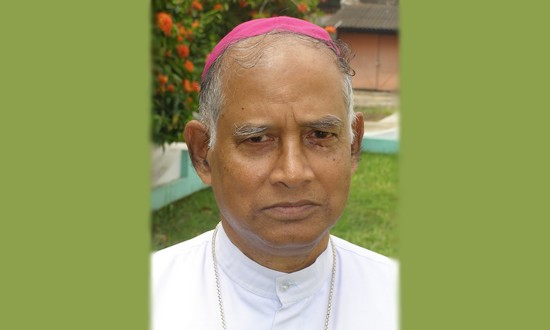
A TRIBUTE: Bishop Joseph Suren Gomes - A Simple Life of Gentle Service

                               Bishop  Joseph  Suren Gomes


Bishop Joseph Suren Gomes, S.D.B, Bishop Emeritus of Krishnagar, West Bengal, passed away on Saturday, May 18, 2024, at 5:55 am in Manorama Hospital, Ranaghat, due to cardiac failure. He was 80 years old. Born on February 14, 1944, in Ashnabad, India (now in Bangladesh), Bishop Gomes dedicated his life to the service of God and the community.

Early Life and Priestly Ordination: Joseph Suren Gomes joined the Salesian Congregation, embarking on his religious journey at the apostolic seminary in Bandel in 1958. He completed his higher education at Salesian College in Sonada, where he also studied philosophy. For theological studies, he attended Kristo Jyoti College in Bangalore. On December 21, 1974, he was ordained a priest at Ranaghat Church for the Salesian Province of Kolkata.

Dedicated Service: Throughout his life, Bishop Gomes served in various capacities. He spent five years as Vice Rector at Bandel Seminary and later served as Rector at Savio Bhavan, Azimganj, from 1987 to 1993. He was the Rector of Don Bosco  Krishnagar from 1995 to 2001. He served in a few Parishes as Assistant Priest. His commitment to the boys under his care was whole-hearted, and he was known for his creative and effective educative methods. As Vice Rector in the initial formation houses, he exemplified gentleness, loving kindness, and encouragement, challenging those around him to deeper growth.

A Humble and Pious Man: Bishop Gomes was unassuming and never sought credit or popularity. His simple living and piety endeared him to many. In hidden ways, he reached out to the last and the least entrusted to his care, embodying the spirit of service and compassion. Before his appointment as Bishop, he  asked many confreres: “"Am I worthy ? Will I manage?" Definitely he was worthy knowing the Scriptural qualities he possessed, especially being “a man without guile”. And he managed in his humble ways, knowing and experiencing well that “every bishop's life is a crucifixion”, following the Master, as commented by one Priest.

Episcopal Ministry: At the age of 58, Pope St. John Paul II appointed him the 7th Bishop of Krishnagar on April 17, 2002. His episcopal ordination took place on May 31, 2002. Bishop Gomes faithfully and in his simple and humble way, led the Diocese of Krishnagar for 17 years until his retirement in May 2019. During his tenure, he actively participated in the Catholic Bishops’ Conference of India (CCBI) and served as vice president of the Family Commission.

Legacy of Faith and Hidden Sacrificing Love:  Bishop Joseph Suren Gomes leaves behind a lasting legacy of faith and service. His dedication to the Salesian mission and his unwavering commitment to the people of Krishnagar will be remembered by all who knew him. His life of service and dedication to the community through a simple life and pastoral ministry, will be remembered with gratitude. 

In his homily at the funeral Mass, Bishop Nirmol Gomes said: “Do not be sad, instead believe and trust in me…. There are many mansions in my Father’s house…. I am the Way, Truth and Life. He was a Shepherd after my heart.” Someone wrote: “His death is a huge loss for the diocese, for the Church and for the congregation.” The Bishop continued, “He had many human qualities: humble, ever smiling, a hidden life of sacrifice, gentle, compassionate, truthful and a childlike soul. He was an amazing person with a quality of the heart. He is an example for all.” Citing John Paul II, he said, “His life was “deeply spiritual”, a prayerful person, exemplary life of a pious, holy and poor man.  He lived a holy priestly life, an inspiring life. He is in heaven and praying for us. Through his hidden ways, little ways, with concern for the poor and the least, his was a life of a pastor for his flock. In short, his was an ‘eucharistic life’. Just before his death he indicated to the Doctor through looks and sign: ‘Jesus is by me’.” As we bid farewell to this good man, we trust that he will now intercede for us and continue to guide us in our Salesian journey. 

The funeral Mass for Bishop Gomes was held on Monday, May 20, 2024, at 10:30 am in the Cathedral of the Most Holy Redeemer, Krishnagar, in the presence of 5 Bishops, numerous Priests, Nuns and the faithful, and was buried, according to his wish, in the public cemetery of the  Guadalupe Church Parish, Ranaghat, Nadia. The burial service ended at 4.40 pm – an indication of the presence of a huge flock who came to bid him adieu.  May his soul rest in peace.  email: sorojmullick@gmail.com

মঞ্চের রাজনীতি, ধর্মীয় মুখোশ, আর খ্র্রীষ্টান নেতৃত্বের নৈতিক সংকট

  পশ্চিমবঙ্গের এক রাজনৈতিক সমাবেশে খ্র্রীষ্টান   পাস্টর ও বিশপদের মঞ্চে দাঁড়ানোকে সরল সৌজন্য বা আন্তধর্মীয় সম্প্রীতির নিদর্শন বলে মেনে নেওয়া...